Just a short drive from the mountains where we had lunch with the Shepherds, lies the historic village of Orgosolo. Orgosolo is known for its more than 150 murals that adorn the buildings on nearly every street. They are on the walls of apartments, businesses, restaurants, and even on churches. The murals were first painted by an anarchist theatre company called Dioniso as a way to protest against politics, and they served as this for many years. In more recent years, several murals were painted to showcase an artist’s work or simply to record moments of life in the village. However, there are still some others being used to openly disagree with something.
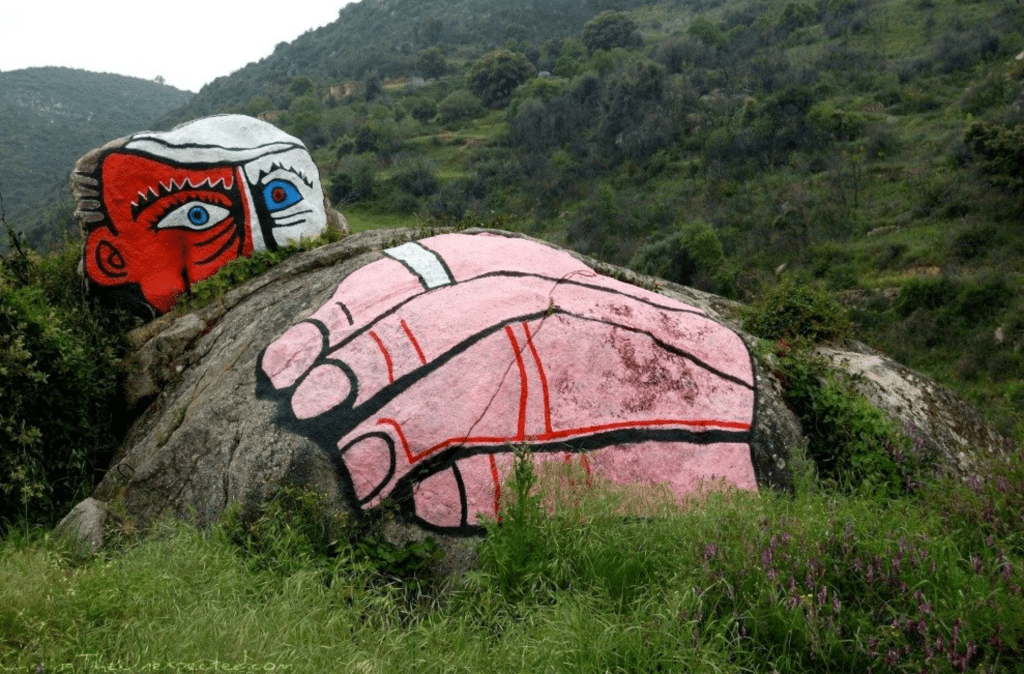
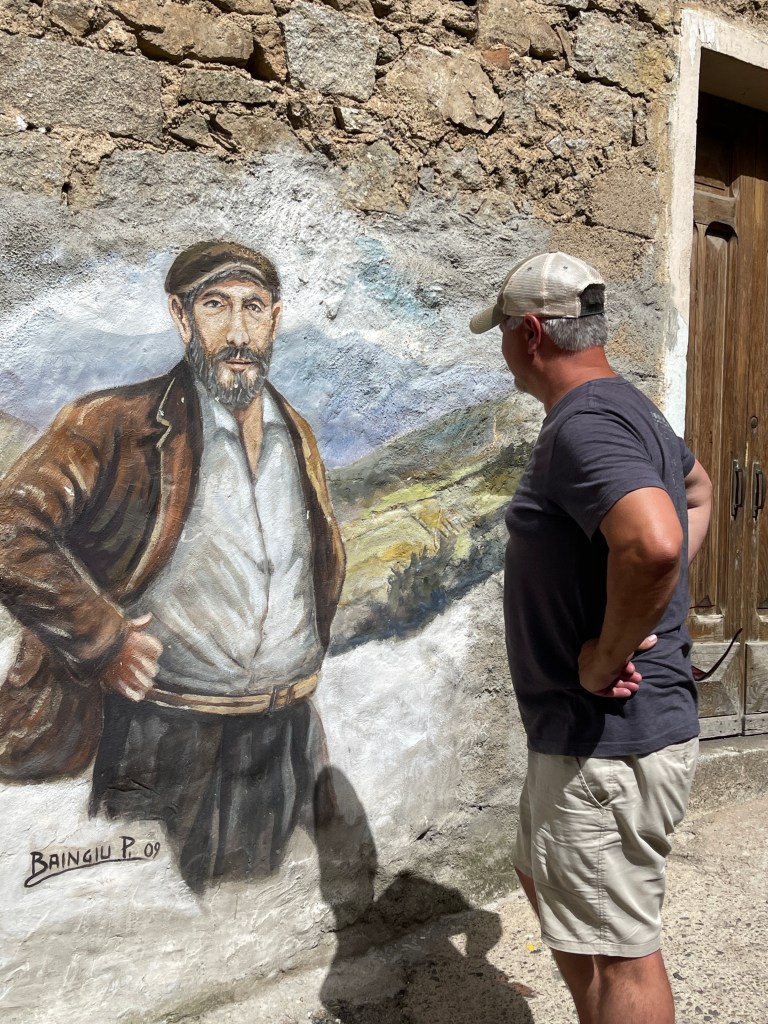

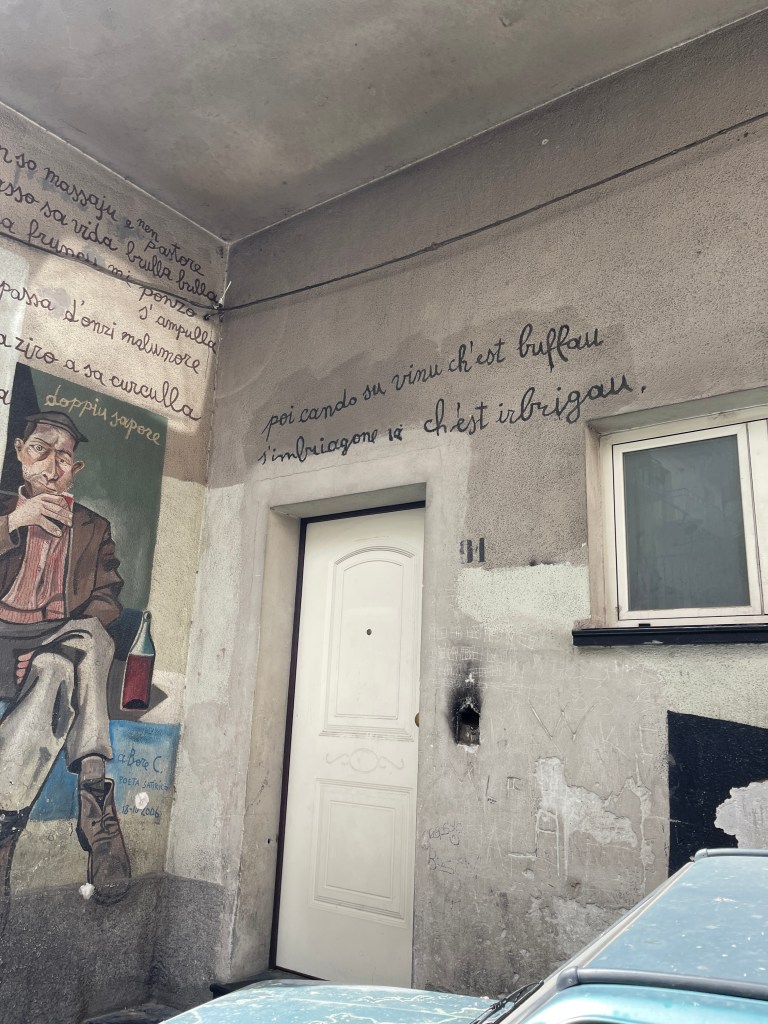
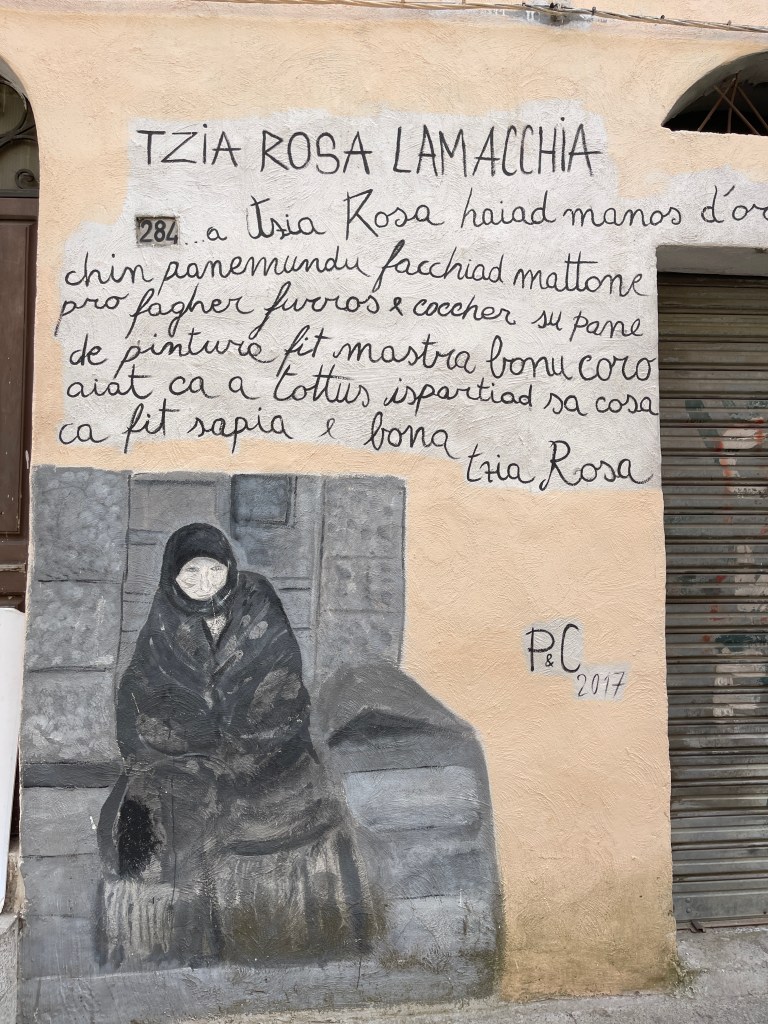

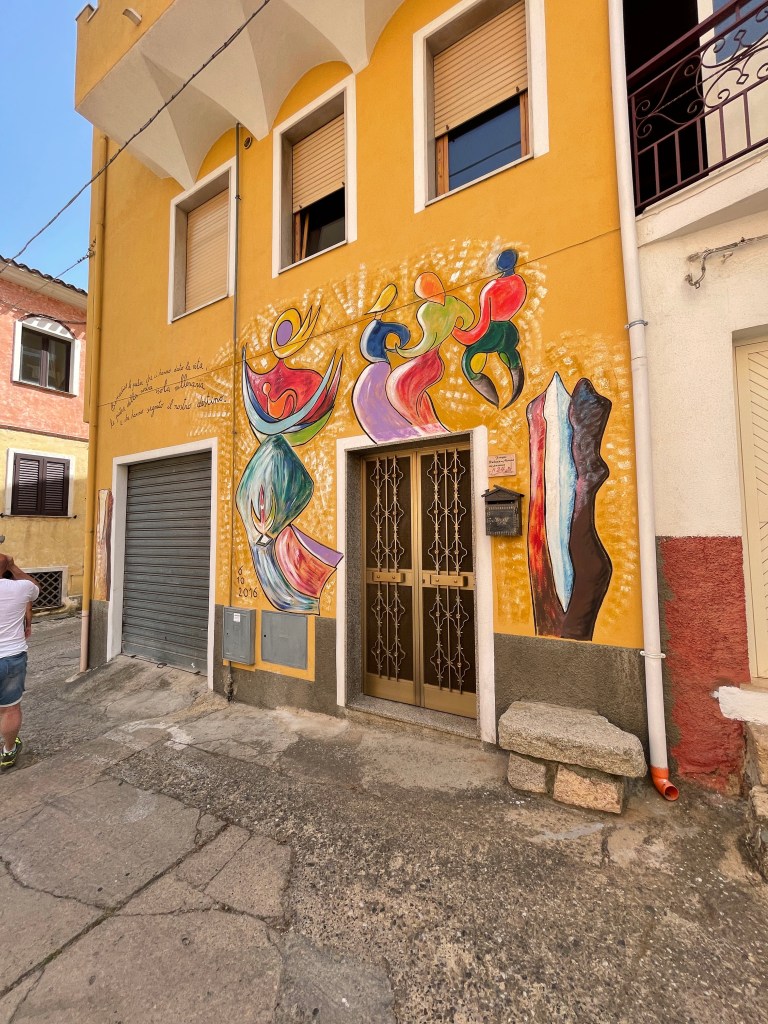
Most murals were painted in muted colors, or maybe they had just faded over the years, but then there were some like this one that reminded me of some of the villages I had visited in Mexico.
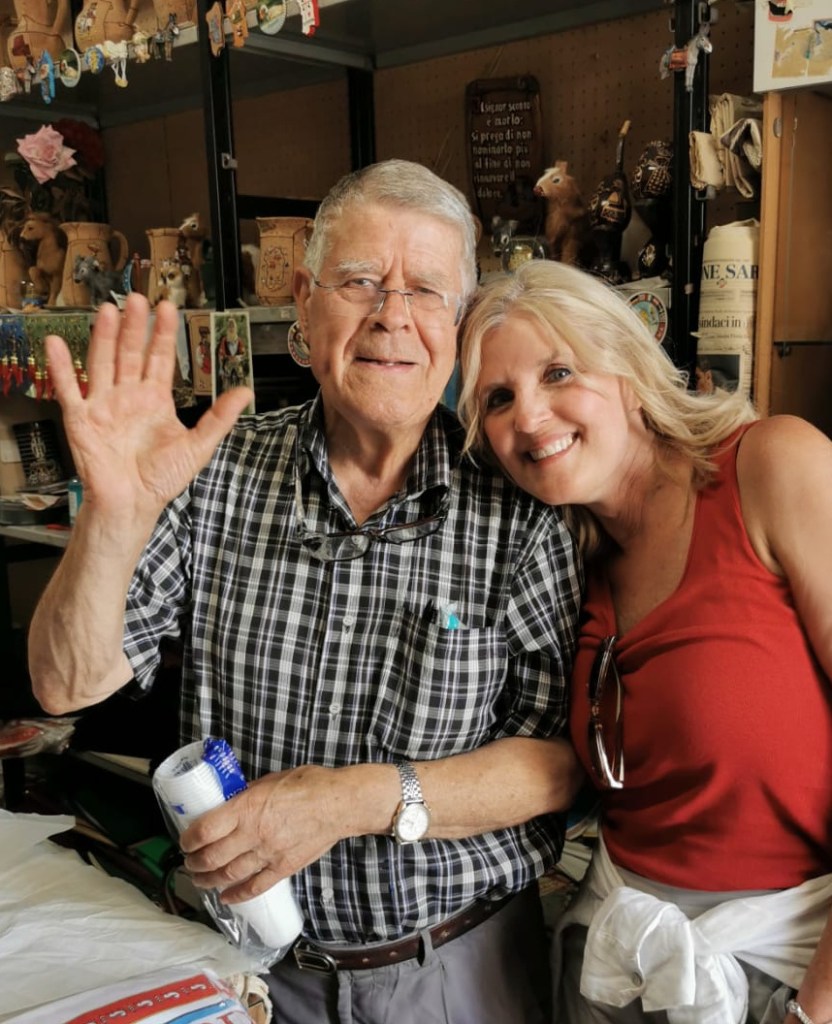
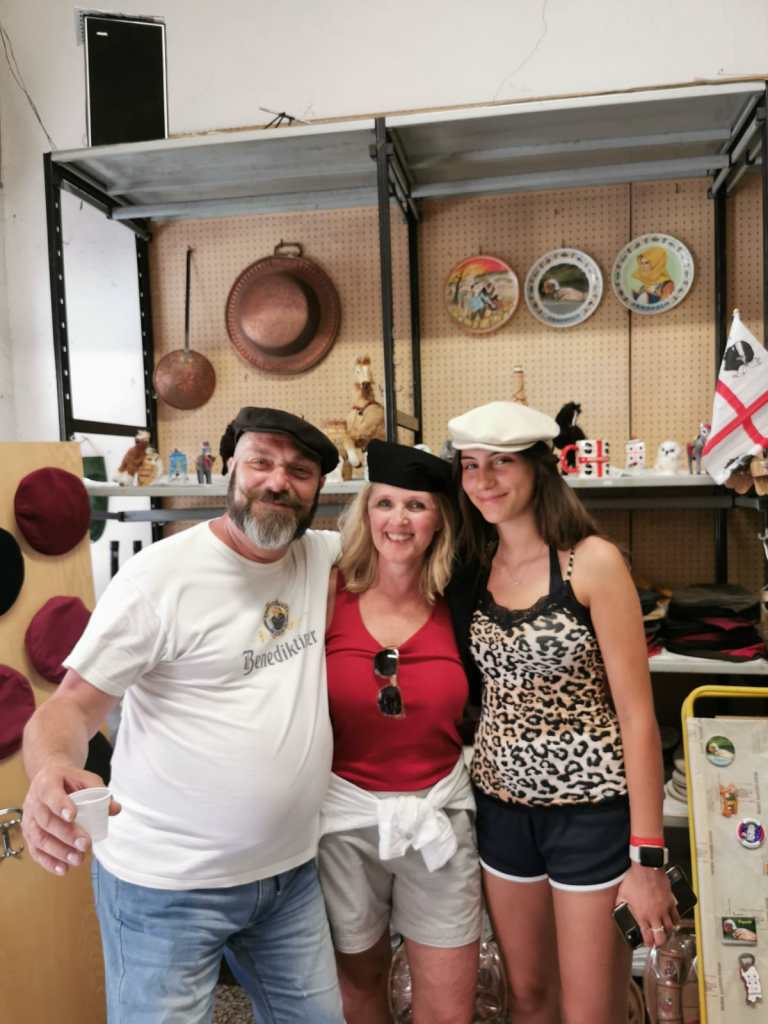
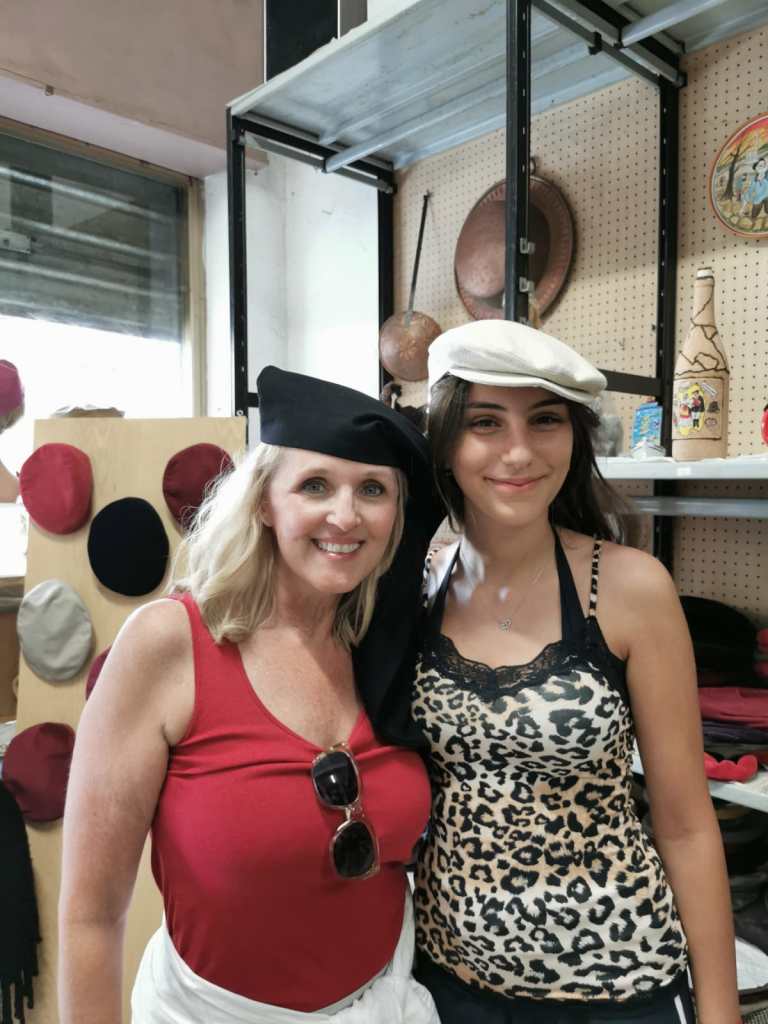
We spent the afternoon walking around Orgosolo learning about (or trying to figure out) what each mural represented, or what political statement it was trying to convey. Then our guide brought us into a little shop where we met the most charming proprietor of the shop. At nearly 90, he was energetic and full of life. He was excited to have me try the traditional headwear of the ladies of Orgosolo, and then he brought out his homemade Mirto, a popular liquor in Sardenia. He kept it in a liter-sized beer bottle. I think I heard him say that the government didn’t want people to make their own so he used the beer bottle to keep it secret. The citizens of Orgosolo at any age sure are a feisty group!
Mirto is made from the Myrtle berry. It is commonly consumed as a digestivo (digestive), adding a sweet finish after a meal. Making your own is not difficult to produce, and many Sardinians still today collect the berries and produce their own supply regardless of what the government wants. Mirto is made by infusing an alcoholic base such as Vodka, with fresh myrtle berries for 8 weeks, so the flavors can soak into the alcohol. Sugar is made into a syrup before being added to the mix, some may use honey as a substitute. Later, it is filtered, pressed, and bottled. The alcoholic percentage normally rests around the 30% mark! Yes, I had a tiny shot, and that was more than enough for me.
 Living in the Zone